

Wellness Research — Cold Modalities
The Cold Case: What Cryotherapy Chambers and Cold Plunges Actually Do to the Body — and Why the Difference Matters
Three distinct modalities live under one cold-therapy umbrella. The published research treats them separately. Here is why that distinction matters for your body, your space, and your protocol.
There is a version of the cold-exposure conversation happening online right now that has almost nothing to do with what the research actually says. It is loud, it is confident, and it has convinced a lot of people that plunging into a fifty-degree tub for three minutes a day will fix their inflammation, their metabolism, their mood, and possibly their marriage.
Some of it is directionally right. Most of it is overstated. And almost none of it distinguishes between the several very different modalities that get lumped together under the word cold — true whole-body cryotherapy inside an enclosed refrigerated chamber, partial-body cryotherapy in a head-out cryosauna cooled with nitrogen vapor, and cold-water immersion in a plunge tub at forty to fifty-five degrees above zero.
They are not the same tool. They do not act on the body the same way. The reader trying to decide which one belongs in their home, their clinic, or their recovery routine deserves the actual, footnoted, peer-reviewed distinction — not the version of it that fits inside a short-form video.
This is that article.
A note on language. Throughout this article we use the terms adjunct therapy and clinically supported deliberately, and we distinguish between what the research demonstrates and what popular coverage assumes. Cold exposure is a tool that works alongside medical care, not in place of it. Nothing here is medical advice. If you are managing a cardiovascular condition, an autoimmune condition, Raynaud’s, pregnancy, or any of the other conditions listed in the safety section below, the right person to make this decision with you is your physician. Cold exposure is a real physiologic stressor. Respect it the way you would respect exercise or heat.
Three Modalities, One Word
When someone says “cold therapy,” they are almost always talking about one of three very different things. Consumer marketing frequently groups all three under “whole-body cryotherapy.” The peer-reviewed literature does not. That gap is where most of the confusion lives.
Whole-body cryotherapy (WBC) — in the strict sense the research literature uses — involves an enclosed chamber that surrounds the entire body, including the head, with electrically refrigerated or indirectly cooled air. Chamber temperatures range from approximately –110°C to –150°C (roughly –166°F to –238°F). Sessions run two to three minutes, delivered as a course of ten to twenty sessions over three to six weeks.
Partial-body cryotherapy (PBC) — delivered in a head-out cryosauna — uses either liquid nitrogen vapor or refrigerated air to surround the body from the neck down, with the head remaining outside the chamber. Temperatures and session lengths overlap with WBC (about –110°C to –150°C, two to three minutes), but the head, breathing zone, and central airway are not exposed to the ultra-cold air. Because “whole-body cryotherapy” is the phrase most consumers recognize, PBC systems are often marketed under that label — but the academic literature treats them as a related but distinct modality. Studies conducted on head-out cryosaunas do not automatically transfer to enclosed WBC chambers, and vice versa.
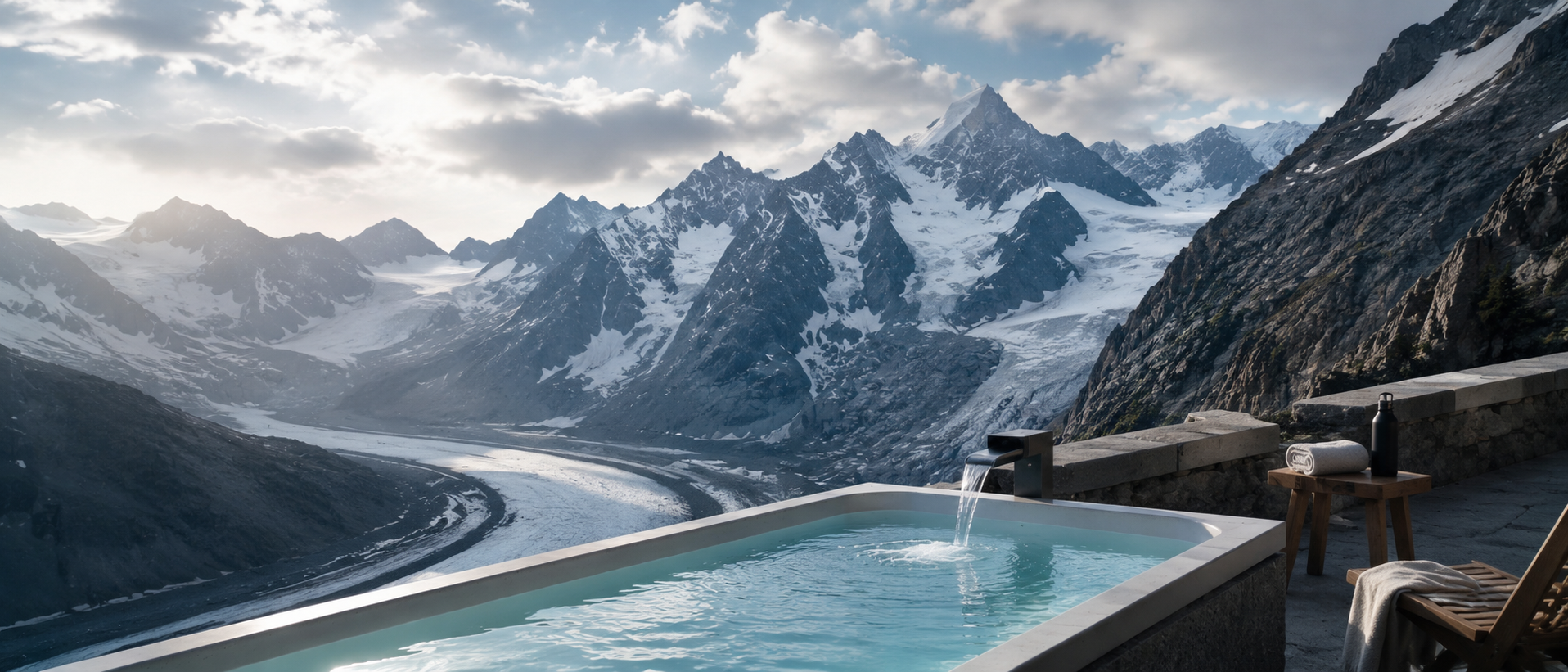
Cold-water immersion (CWI) — delivered in a cold plunge, ice bath, or immersion tub — uses water at temperatures typically ranging from about 10°C to 15°C (50°F to 59°F), with more aggressive protocols dipping to 5°C to 10°C. Sessions run one to ten minutes. Water transfers heat from the body far more efficiently than air, which is why a fifty-degree plunge feels shocking in a way that fifty-degree air does not.
All three share a family resemblance: they activate the sympathetic nervous system, can increase catecholamines including norepinephrine, and produce peripheral vasoconstriction followed by rewarming-related vascular changes. But the depth of the cold, the duration of the exposure, the medium of contact, and whether the head and airway are exposed are different enough that the three literatures are best read separately.
A study on enclosed-chamber WBC in rheumatoid arthritis does not automatically transfer to a head-out cryosauna. A mood-improvement finding from CWI does not automatically transfer to a cryosauna session. Before you evaluate any specific claim, know which modality the claim is about — and know which modality the equipment you are considering actually is.
What Actually Happens in the First Ninety Seconds
Within seconds of cold exposure, skin thermoreceptors begin signaling and sympathetic-nervous-system activity increases. Catecholamines, including norepinephrine, can rise, although the magnitude depends on the modality, temperature, exposure duration, and individual response. The most frequently cited quantified human example comes from Šrámek and colleagues, who found that one hour of immersion in 14°C water raised plasma norepinephrine by approximately 530%.1 A brief plunge or cryosauna session should not be assumed to produce the same magnitude of response. The sympathetic activation itself is real, fast, and one of the more reproducible findings in the cold literature — it is the mechanism most often invoked to explain why people report feeling clear-headed and mildly elevated in the hours after a cold session.
At the same time, peripheral blood vessels constrict. Blood shunts from the skin and extremities toward the core. In cold-water immersion specifically, this initial “cold shock” is where the acute cardiovascular risk lives for untrained users with underlying disease. When the session ends, the response reverses — vasoconstriction gives way to vasodilation, and heart rate and breathing settle. Over repeated exposures, the vasoconstriction-and-rewarming cycle appears to promote endothelial adaptation. The analogy sometimes drawn to aerobic exercise adaptation is imperfect and should not be overstated — but the direction of the underlying vascular response is not in dispute.
Repeated cold-water exposure can reduce elements of the cold-shock response for many people, although the rate and degree of habituation vary among individuals and protocols. A 2024 systematic review and meta-analysis found that repeated cold-water immersion produced measurable habituation of cold-shock variables, generally after approximately four immersions, with meaningful variation among studies and individuals.9 Cold-shock habituation is real, but the response is variable and should not be promised by a particular session number.
Extreme-Cold Air Therapy and Systemic Inflammation
Whole-body and partial-body cryotherapy — collectively, extreme-cold air therapies — have accumulated an evidence base in the rheumatologic and systemic-inflammation literature. That evidence is more developed than the sweeping consumer claims made about cryotherapy, but it is not yet consistent enough to establish a generalized systemic anti-inflammatory treatment effect.
The 2025 Scientific Reports meta-analysis. Scientific Reports, a peer-reviewed Nature Portfolio journal, published a meta-analysis of eleven randomized controlled trials (274 total participants, individual trial samples ranging from five to thirty-two people) investigating extreme-cold air therapy’s effect on systemic inflammation.2 The pooled analysis documented decreases in IL-1β and increases in IL-10 — both consistent with an anti-inflammatory direction. IL-6, TNF-α, CRP, and several other markers did not reach statistical significance in the pooled analysis. Heterogeneity across trials was substantial. The authors themselves emphasized the small sample sizes, wide protocol variation, and the resulting uncertainty in generalizing the findings.
Some of the cytokines that moved are involved in inflammatory pathways that are also targeted by the drug classes used to treat rheumatoid arthritis and related conditions. That mechanistic overlap is scientifically interesting — but it does not establish that cryotherapy produces effects comparable to pharmaceutical treatment. Biomarker movement is not the same thing as a validated clinical outcome, and cold air is not a substitute for disease-modifying medication.
Rheumatoid arthritis specifically. A randomized trial involving fifty-six patients with active rheumatoid arthritis evaluated six sessions of whole-body cryotherapy at −130°C during a sixteen-day multimodal rheumatologic treatment program.7 Pain improved significantly more in the intervention group. Disease activity and functional capacity also improved after the intervention, although between-group differences were not significant at the twelve-week follow-up. The researchers described the broader clinical evidence for cryotherapy in rheumatoid arthritis as scarce.
Protocol specificity is not optional. Published extreme-cold air studies use differing chamber configurations, temperatures, session frequencies, and populations. Chamber configuration is not always reported or categorized consistently, so findings should not be assigned to a head-out cryosauna or an enclosed chamber unless the underlying study configuration has been verified. Most studies use exposures near –110°C to –140°C for approximately one to three minutes, often delivered as a clustered course rather than as sporadic single sessions.
If the question you are trying to answer is “is there measurable biomarker evidence that a defined course of extreme-cold air therapy may support a broader plan for a chronic inflammatory condition?” — the answer, cautiously, is yes. If the question is “will a cryotherapy chamber replace or match my rheumatology medication?” — the answer, honestly, is no. The right role for this modality is as an adjunct, coordinated with your physician, at the protocol the research actually describes.
Cold-Water Immersion: Recovery, Wellbeing, and Metabolism
Cold-water immersion has its strongest evidence base in a different set of questions — post-exercise recovery, stress and perceived wellbeing, and early metabolic adaptation.
Post-exercise recovery
A 2022 systematic review and meta-analysis in Sports Medicine — synthesizing dozens of controlled trials — reported that CWI reduced perceived muscle soreness and, in trained populations, modestly improved subsequent performance markers when applied within an hour of exercise.3 Important nuance: for people training specifically for muscle growth, regular cold-water immersion immediately after resistance-training sessions may attenuate some hypertrophy-related adaptations.8 Occasional use is not the same as repeatedly applying CWI after every strength session. Trained strength athletes often shift their cold sessions to non-training days or morning hours to preserve recovery and wellbeing benefits without dampening the growth response.
Stress, Wellbeing, and Emerging Mental-Health Research
This is where popular coverage has run the furthest ahead of the actual research base. A widely cited RCT by Buijze and colleagues in PLOS ONE documented that a routine of daily cold showers over thirty days reduced self-reported sickness absence from work by roughly 29% compared to control.4 It is important to know what that finding is and is not. It measured sickness absence — not fewer illness days, not mood, not mental health. The study was not primarily a mental-health trial. Its secondary quality-of-life improvement was small and did not persist.
A 2025 systematic review synthesizing eleven cold-water immersion studies (3,177 participants) found a more nuanced picture. Stress was reduced at approximately twelve hours post-exposure but not immediately, not at one hour, not at twenty-four hours, and not at forty-eight hours. There were indications of improved sleep and quality of life in some populations. No significant improvement in overall mood was found. And — a finding the popular coverage almost never mentions — inflammatory markers increased acutely immediately after and one hour after immersion. The authors concluded that the current evidence is insufficient to establish an optimal temperature, duration, or frequency for wellbeing effects.5
Cold-water immersion may be a useful wellbeing practice for some people. Some of the effects that get reported anecdotally are consistent with the sympathetic-nervous-system biology. But it is premature to describe cold plunging as an established mental-health intervention, and the responsible framing is that many of the trials are small, involve young or athletic populations, or combine cold exposure with exercise, outdoor environments, or group participation — all of which are wellbeing interventions in their own right.
Metabolic adaptation
Repeated cold exposure — broadly — can activate and expand brown adipose tissue (BAT), the metabolically active fat tissue that generates heat by burning glucose and fatty acids. The foundational human data comes from van Marken Lichtenbelt and colleagues in The New England Journal of Medicine, who investigated mild environmental (air) cold exposure, not cold-water immersion.6 That distinction matters. The NEJM finding demonstrated that adult humans have functional BAT that responds to sustained mild cold — it did not investigate a home cold-plunge routine.
Later work has extended the general observation to cold-water immersion, winter swimming, and other cold exposures, and has associated repeated cold with improved glucose handling and insulin sensitivity in some populations. But direct evidence that a practical home-plunge routine produces durable improvements in insulin sensitivity, body composition, or weight remains limited. The metabolic effects are real but modest — meaningful for insulin sensitivity, unlikely to replace exercise or dietary change in weight management.
A responsible summary: cold exposure broadly can activate BAT and temporarily increase thermogenesis. Immersion appears to drive more sustained core-temperature stress than mild air exposure, which is one reason the plunge literature has grown alongside the BAT literature. But the practical, durable, weight-management framing that appears in some consumer coverage runs past what the data actually shows.
Where the Modalities Diverge
Read the three literatures side by side and a picture emerges more useful than any single read.
- Systemic anti-inflammatory biomarker effect — extreme-cold air therapies (WBC and PBC) have the more-developed evidence, particularly in rheumatologic populations, though the evidence base remains limited and inconsistent.
- Post-exercise recovery in a general population — CWI has the larger and more accessible trial base, particularly for perceived soreness and short-term functional recovery.
- Brown adipose tissue and metabolic adaptation — the foundational human evidence used mild air exposure; cold-water immersion has extended the observations, but the practical weight-management framing runs ahead of the data.
- Cardiovascular safety profile — all three require respect, but the cold-shock response of a fifty-degree plunge in a naive user is a different acute cardiovascular event than a two-minute head-out cryosauna session, and none of the three should be treated as equivalent for populations with underlying disease.
- Practical footprint — a cryosauna is a piece of equipment with dedicated space, ventilation, and (for nitrogen systems) refill logistics. A cold plunge plumbs in like a spa tub. They belong in different rooms of a house, and different rooms of a clinic.
The more sophisticated protocols emerging in high-performance recovery and integrative-wellness settings do not force a choice among the three. They may deploy extreme-cold air therapy over a defined course for systemic biomarker work, and use CWI as an ongoing weekly recovery, wellbeing, and metabolic-support tool. The modalities are different, and the application should match the person and the goal.
Cold Exposure Safety
Before we discuss how any of these tools are used in practice, this is the section that matters most.
Cold Exposure Safety — Read Before Practice
- Never combine cold-water immersion with breath-holding exercises. The combination has been implicated in unconsciousness and drowning events.
- Never plunge alone, particularly during your first sessions. The acute cold-shock response can produce hyperventilation, gasping, and disorientation in the first thirty seconds.
- Keep your head above water during acclimation. Head submersion adds cold-shock magnitude, dive-reflex effects, and drowning risk in a way the general recovery evidence does not endorse.
- Exit the water or the chamber immediately for chest pain, severe dizziness, confusion, weakness, uncontrolled breathing, or an inability to warm back up on your own. These are not adaptation signals — they are stop signals.
- Nitrogen-cooled cryosaunas require trained operators, adequate room ventilation, and required safety monitoring. Inert-gas asphyxiation is a real, documented hazard for improperly ventilated nitrogen systems.
- Obtain physician clearance before starting if you have cardiovascular disease, uncontrolled hypertension, arrhythmia, impaired sensation (including diabetic neuropathy), Raynaud’s syndrome, cold-induced urticaria, active infection, pregnancy, or any other condition that could interact with cold exposure. The general-population safety literature for CWI remains less developed than the modality’s popularity suggests.
- Cold-water immersion acutely raises heart rate, blood pressure, and respiration. These are real physiologic events. If any of them are already unstable, cold is not the tool to start with.
If you have read this section and any part of it applies to you, the right next step is a conversation with your physician — not a plunge tub in the garage.
What This Looks Like in Practice
The most common question in a Wellness Concierge call about cold is not “does it work?” It is “which one is right for me, and how do I actually use it without overdoing it?” A short, honest framework — informed by the research but presented as commonly-used practical ranges, not established clinical prescriptions.
- Start small and stay curious. If you have never used cold on purpose, a conservative familiarization is a contrast-shower routine — ninety seconds warm, thirty seconds cold, repeat two or three times, end on cold. Two weeks of this will tell you more about how your body responds than any article can. This is a conservative familiarization approach, not an evidence-derived prescription.
- Match the modality to the goal. For post-training recovery, wellbeing, and general metabolic support, cold-water immersion is the more common first investment in the home setting. For systemic biomarker support for a chronic inflammatory condition — coordinated with your physician — a course of extreme-cold air therapy is worth understanding in detail.
- Respect the range the research describes. Research protocols vary substantially. Many extreme-cold air studies use ten to twenty two-to-three-minute sessions delivered close together in time. Many CWI trials use water at approximately 10°C to 15°C for brief exposures of two to five minutes. But exposure periods across the CWI literature range from about thirty seconds to two hours, and no universally validated wellness prescription has been established. Colder and longer are not necessarily better.
- Timing matters if you train for muscle mass. Aggressive cold immediately after a hypertrophy-focused session may blunt the growth signal. Move cold to non-training days or morning hours if muscle growth is the priority.
- Know your contraindications (see the safety section above). This is not a modality where you can skim the small print.
- Consider a Wellness Concierge consultation before you buy. The equipment lasts a long time. Getting the modality-to-goal match right the first time matters more than any single feature comparison.
A Personal Note from the Founder
I want to be honest with you about who is writing this article. I am the reader described in our companion piece on healthspan — a Gen X woman whose body still remembers every injury she thought she’d bounce back from. Two devastating knee injuries before I graduated high school. Multiple ankle injuries on top of them. Hardware in my body now. A left hand still relearning what it can do after a recent surgery.
Cold has been one of the more interesting areas of my recovery research — not because I naturally gravitate toward it, but because I want to understand which claims are real and which are marketing. Years of injuries often make warmth feel far more inviting to my body. That tension is part of why I wanted to understand the physiology rather than repeat the hype.
The reason I wrote this article, and why it took the shape it did, is that most of my generation is standing at the same threshold I am — trying to figure out which of the tools that are suddenly available to us actually earn their place in the next thirty years, and which are just the wellness aisle in loud clothes. The modalities here are real. The evidence is real. The distinctions among them matter more than the marketing lets on.
This article was researched carefully. But it was lived first.
— Bree
Explore the Systems Referenced Above
The cold-side systems curated by InfraCore Wellness are the same categories of equipment the research protocols above are built around. Neither collection is a recommendation for a specific person or condition — that conversation is what a Wellness Concierge is for.
- Explore InfraCore's cryotherapy collection—professional-grade partial-body cryosaunas and extreme-cold air systems.
- See our cold plunge & chiller lineup — cold-water immersion systems for home and clinic.
Closing
The cold-side systems curated at InfraCore Wellness — cryotherapy chambers on the extreme-cold air side, cold plunge systems as those partnerships mature — are equipment within the categories discussed above.
A transparent disclosure, because you deserve one: InfraCore Wellness sells equipment in the cryotherapy and cold-water-immersion categories discussed in this article. The research summarized here concerns modalities and study protocols. It does not establish that every commercial device — including every device we carry — will reproduce the outcomes reported in any particular study. Where you see a claim in this article, it belongs to the underlying research, not to a specific product.
If you take one thing from this article, take this: the right way to think about the cold side of your recovery routine is as a match — the right modality, at a reasonable protocol, for the right person and the right goal, coordinated with the rest of your medical picture. The modalities are different, and the application should match the person and the goal.
If you would like a Wellness Concierge to walk you through which of these matches your body, your space, and your goals — including whether any of them belong in your specific situation at all — reach out. Our broader adjunct-therapy piece sits next to this one in the Library.
Frequently Asked Questions
What is the difference between a cold plunge and a cryotherapy chamber? Cold-water immersion (cold plunge) uses water at typically 10°C to 15°C (50°F to 59°F) for two to ten minute sessions. Extreme-cold air therapies use dry cold at –110°C to –150°C for two to three minute sessions. Extreme-cold air therapies come in two forms: whole-body cryotherapy inside an enclosed chamber (head included) and partial-body cryotherapy in a head-out cryosauna. Consumer marketing frequently groups the last two under “whole-body cryotherapy” — the peer-reviewed literature does not.
Is one safer than the other? All three are real physiologic stressors. Cold-water immersion carries a “cold shock” acute cardiovascular response in the first thirty seconds that is meaningful for populations with cardiovascular disease. Cryosauna sessions are shorter and delivered at controlled facilities, but nitrogen-cooled systems specifically require proper ventilation to prevent inert-gas asphyxiation risk. None of the three is appropriate for uncontrolled hypertension, unstable cardiovascular disease, Raynaud’s syndrome, cold-induced urticaria, or pregnancy without physician clearance. See the Cold Exposure Safety box above.
How often do I need to do it for the evidence to apply? The published extreme-cold air research commonly uses clustered courses of repeated sessions. Cold-water-immersion protocols vary substantially: studies have used exposures ranging from approximately thirty seconds to two hours, with both single and repeated sessions represented. No universally validated weekly frequency or total exposure time has been established.
Does cold plunge hurt muscle growth? For people training specifically for muscle growth, regular cold-water immersion immediately after resistance-training sessions may attenuate some hypertrophy-related adaptations. Occasional use is not the same as repeatedly applying CWI after every strength session. Trained hypertrophy athletes often move their cold sessions to non-training days or morning hours.
Do I need both a cryosauna and a cold plunge? Most home users do not. The right question is which one matches your primary goal. High-performance recovery centers and integrative-wellness clinics increasingly deploy both — but that is a facility decision, not a starter one.
Can I get the same effect from a cold shower? Cold showers activate some overlapping acute mechanisms, including sympathetic activation and subjective alertness, and have their own trial base (see the Buijze reference in the mood section). They are an excellent starting point. They do not fully replicate the sustained core-temperature stress that appears to drive the effects associated with immersion protocols.
Will a cold plunge improve my mood? The evidence for a mood benefit specifically is less settled than popular coverage suggests. The 2025 CWI systematic review found reduced stress at twelve hours post-exposure and some indications of improved sleep and quality of life, but no significant improvement in overall mood. Cold-water immersion may be a useful wellbeing practice for some people; it is premature to describe it as an established mental-health intervention.
References and Source Reading
Further reading from the InfraCore Wellness Library: - Adding Life to Your Years - Red Light for Joint Recovery - Photobiomodulation Science
This article was researched and written by the InfraCore Wellness team. It is educational content, not medical advice. Cold exposure is a real physiologic stressor; if you are managing a cardiovascular condition, an autoimmune condition, Raynaud’s, cold-induced urticaria, pregnancy, or any other condition that could interact with cold protocols, please coordinate any new modality with your physician. To speak with a Wellness Concierge about which of these systems matches your goals, space, and investment level, call (877) 414-3717 or reach out here.
-
Šrámek P, Šimečková M, Janský L, Šavlíková J, Vybíral S. Human physiological responses to immersion into water of different temperatures. European Journal of Applied Physiology, 2000; 81(5):436–442. Documented approximately 530% increase in plasma norepinephrine following one-hour immersion at 14°C. The magnitude is study-condition-specific; shorter cryosauna and plunge exposures do not reliably produce the same response. ↩
-
He J, Zhang X, Ge Z, Shi J, Guo S, Chen J. Whole-body cryotherapy can reduce the inflammatory response in humans: a meta-analysis based on 11 randomized controlled trials. Scientific Reports. 2025;15:7759. doi:10.1038/s41598-025-90396-3. Pooled analysis of 11 randomized controlled trials, 274 total participants (individual trial samples 5–32). Reported significant pooled changes in IL-1β and IL-10, while IL-6, TNF-α, and CRP were not significant. Authors emphasized small samples, wide protocol variation, and residual uncertainty. ↩
-
Moore E, Fuller JT, Buckley JD, et al. Impact of cold-water immersion compared with passive recovery following a single bout of strenuous exercise on athletic performance in physically active participants: a systematic review with meta-analysis and meta-regression. Sports Medicine, 2022; 52(7):1667–1688. ↩
-
Buijze GA, Sierevelt IN, van der Heijden BCJM, Dijkgraaf MG, Frings-Dresen MHW. The effect of cold showering on health and work: a randomized controlled trial. PLOS ONE, 2016; 11(9):e0161749. DOI: 10.1371/journal.pone.0161749. Documented approximately 29% reduction in self-reported sickness absence from work across a 30-day protocol of daily cold showers. The trial did not measure fewer illness days directly and did not report a significant persistent mental-health benefit; secondary quality-of-life improvements were small and did not persist. ↩
-
Cain T, Brinsley J, Bennett H, Nelson M, Maher C, Singh B. Effects of cold-water immersion on health and wellbeing: A systematic review and meta-analysis. PLOS ONE. 2025;20(1):e0317615. doi:10.1371/journal.pone.0317615. Pooled 11 studies, 3,177 total participants. Findings included reduced stress at 12 hours post-exposure (but not immediately, at 1 hour, at 24 hours, or at 48 hours), some indications of improved sleep and quality of life, no significant overall mood improvement, an acute increase in inflammatory markers immediately and one hour after immersion, and insufficient evidence to determine optimal temperature, duration, or frequency. ↩
-
van Marken Lichtenbelt WD, Vanhommerig JW, Smulders NM, et al. Cold-activated brown adipose tissue in healthy men. New England Journal of Medicine, 2009; 360(15):1500–1508. DOI: 10.1056/NEJMoa0808718. Foundational demonstration of functional brown adipose tissue in adult humans in response to mild environmental (air) cold exposure. This study did not investigate cold-water immersion; direct extension of its findings to a home-plunge routine requires additional supporting evidence. ↩
-
Klemm P, Hoffmann J, Asendorf T, et al. Whole-body cryotherapy for the treatment of rheumatoid arthritis: a monocentric, single-blinded, randomised controlled trial. Clin Exp Rheumatol. 2022;40(11):2133–2140. doi:10.55563/clinexprheumatol/lrff6k. The trial included 56 patients, six −130°C sessions within a 16-day program, and a 12-week follow-up. ↩
-
Roberts LA, Raastad T, Markworth JF, et al. Post-exercise cold water immersion attenuates acute anabolic signalling and long-term adaptations in muscle to strength training. Journal of Physiology. 2015;593(18):4285–4301. doi:10.1113/JP270570. Twelve-week resistance-training study demonstrating that regular post-workout cold-water immersion attenuated gains in muscle mass and strength relative to active recovery. The finding informs timing decisions for people training specifically for hypertrophy; it is not a blanket argument against CWI for recovery or general wellbeing. ↩
-
Barwood MJ, Eglin C, Hills SP, et al. Habituation of the cold shock response: A systematic review and meta-analysis. Journal of Thermal Biology. 2024;119:103775. doi:10.1016/j.jtherbio.2023.103775. The review found that repeated cold-water immersion produced measurable habituation of cold-shock variables, generally after about four immersions, with variation among studies. ↩
From the Wellness Library — Cornerstone Research
Wellness Technology as Adjunct Therapy for Chronic Illness, Cancer Recovery, and Healthy Aging
Cold-side modalities are one part of a broader research picture. This companion cornerstone piece covers whole-body cryotherapy alongside HBOT, photobiomodulation, and sauna in the context of chronic illness support, cancer recovery, and healthy aging — with full clinical citations.